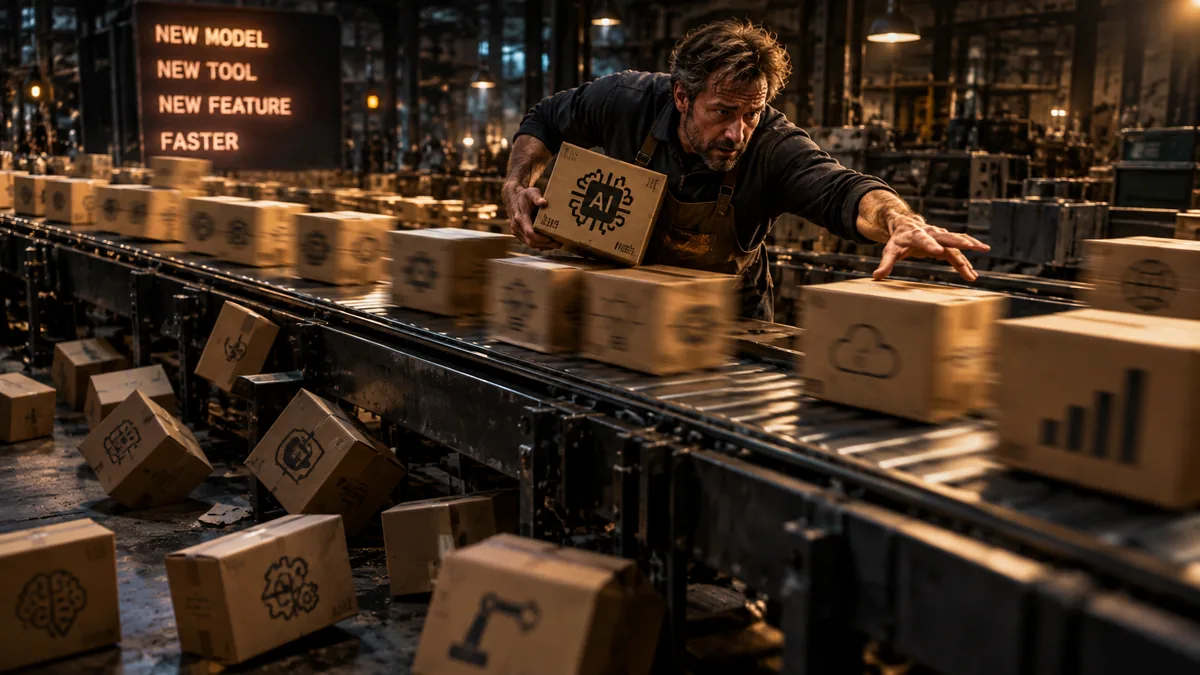
A few days ago, I wrote that maybe AI needs to slow down a little.
Then something quite interesting happened.
Dario Amodei, CEO of Anthropic, published an essay called We Must Pace the Frontier. His reasons are much bigger and more serious than mine. He's talking about safety, evaluation and making sure our ability to understand and control these systems can keep up with what we're building.
Then Sam Altman agreed with part of it. Elon Musk backed the idea too.
Three people sitting very close to the centre of this race suddenly talking about pace.
And there was me, a few days earlier, sitting in my little room thinking:
Can we just have a minute?
I'm not an AI expert. I'm not a researcher. I'm definitely not here to tell Anthropic, OpenAI, xAI or anybody else how to build artificial intelligence.
I'm simply somebody who uses it. A lot.
And from where I'm sitting, maybe slowing down isn't such a bad thing.
Can we actually enjoy what we already have?
For the last year or so, I've sometimes felt like I'm permanently behind.
New model. New feature. New tool. New prompting technique. New video telling me the tool I started learning last week is apparently already the wrong one.
You start getting comfortable with something and ten other things appear. Then somebody online tells you that this is the thing you absolutely need to learn. A week later it's something else.
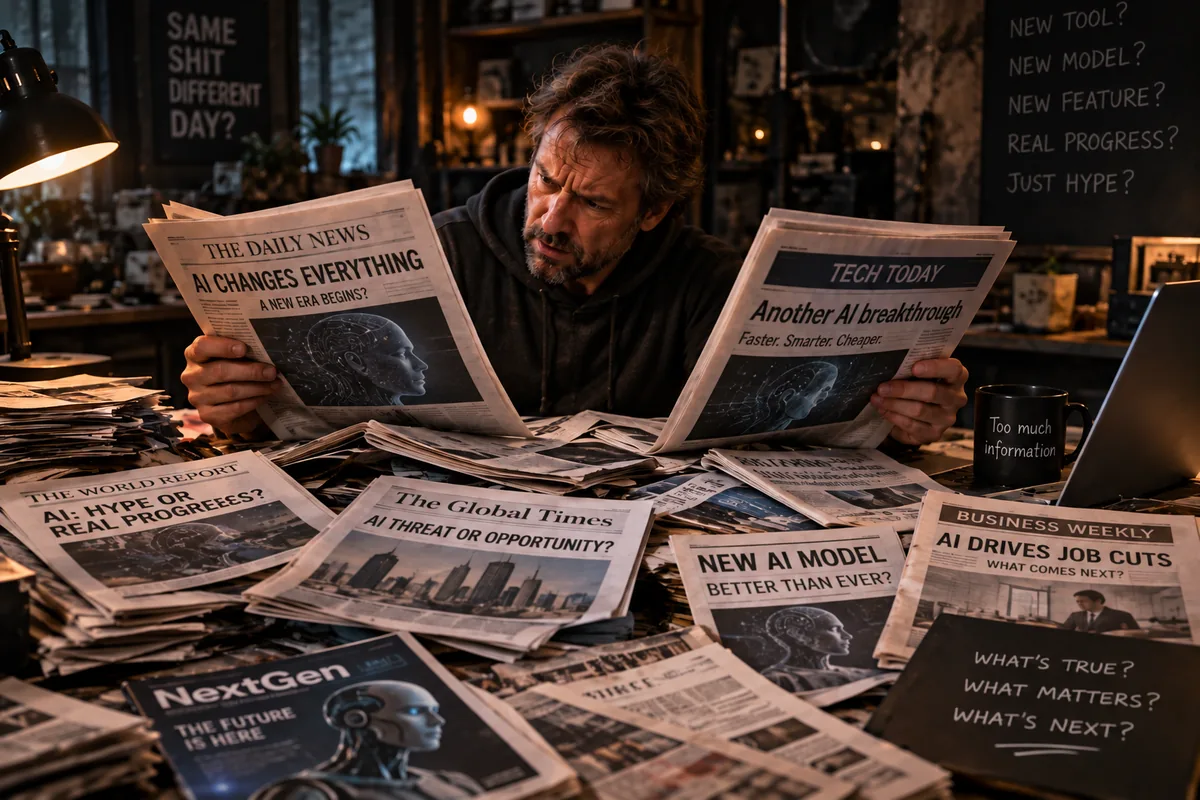
After a while, something strange happens. Instead of being excited about AI, you start feeling stressed by it.
And I'm someone who actually enjoys this stuff. So imagine somebody who doesn't.
Imagine somebody in their late forties or fifties who keeps hearing AI, AI, AI everywhere they turn. They haven't really used it yet. They don't understand half the terminology. Every week the headlines tell them it's becoming more powerful.
Eventually it's quite easy to think: forget it, this isn't for me.
I think that's a shame. Because underneath all that noise is something incredible.
We already have tools that allow ordinary people to attempt things that not very long ago might have required a team of people, specialist knowledge, a lot of money, or all three.
Maybe we need a little time to actually understand what we've been given.
Fast doesn't always mean better
I've learned something else from years of building things, fixing things and occasionally getting things completely wrong.
When we rush, we miss things. I've done it myself plenty of times.
I have a main job. Another job alongside it. Client projects. Websites. Ideas. Things I'm experimenting with simply because somebody asked me a question and I thought: I wonder if I could build that.
Sometimes there's not even an order at the end of it. Financially, that doesn't always make much sense.
But something else happens. I learn.
Even when the project goes nowhere, the experience doesn't disappear. The mistakes don't disappear either. Next time I know something I didn't know before.
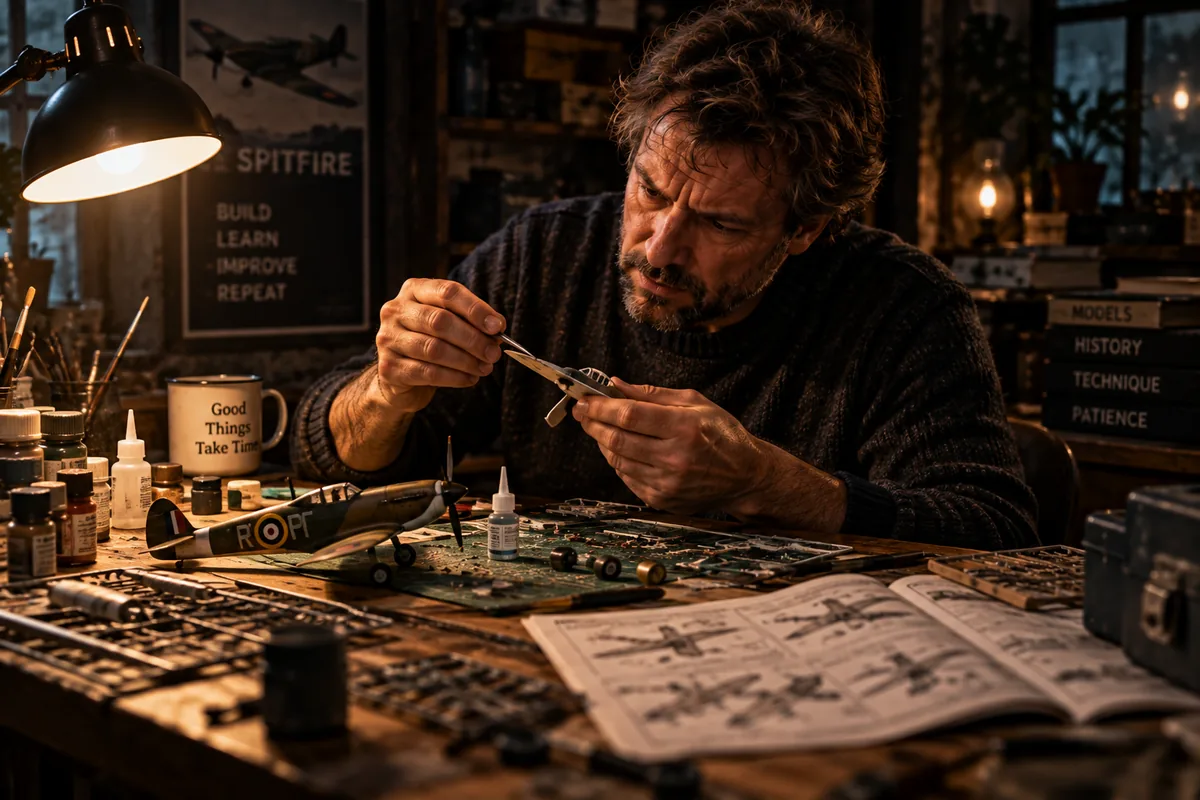
That's why I'm beginning to think one of the most useful skills I can learn at this point in my life isn't another piece of software. It's patience.
Patience over panic.
Not jumping every time somebody tells me there's a new tool I absolutely must learn.
Pick something. Stay with it. Understand it. Build something with it. Break something with it. Fix it.
Then you've actually learned something.
Your experience didn't suddenly become worthless
This is the part I really want to say to people around my age and older.
I'm 47. I didn't grow up with AI. But I didn't arrive here empty-handed either. Neither did you.
Maybe you've spent thirty years as an electrician. Maybe you're a plumber, carpenter, teacher, mechanic, engineer, chef, nurse, technician or something completely different.
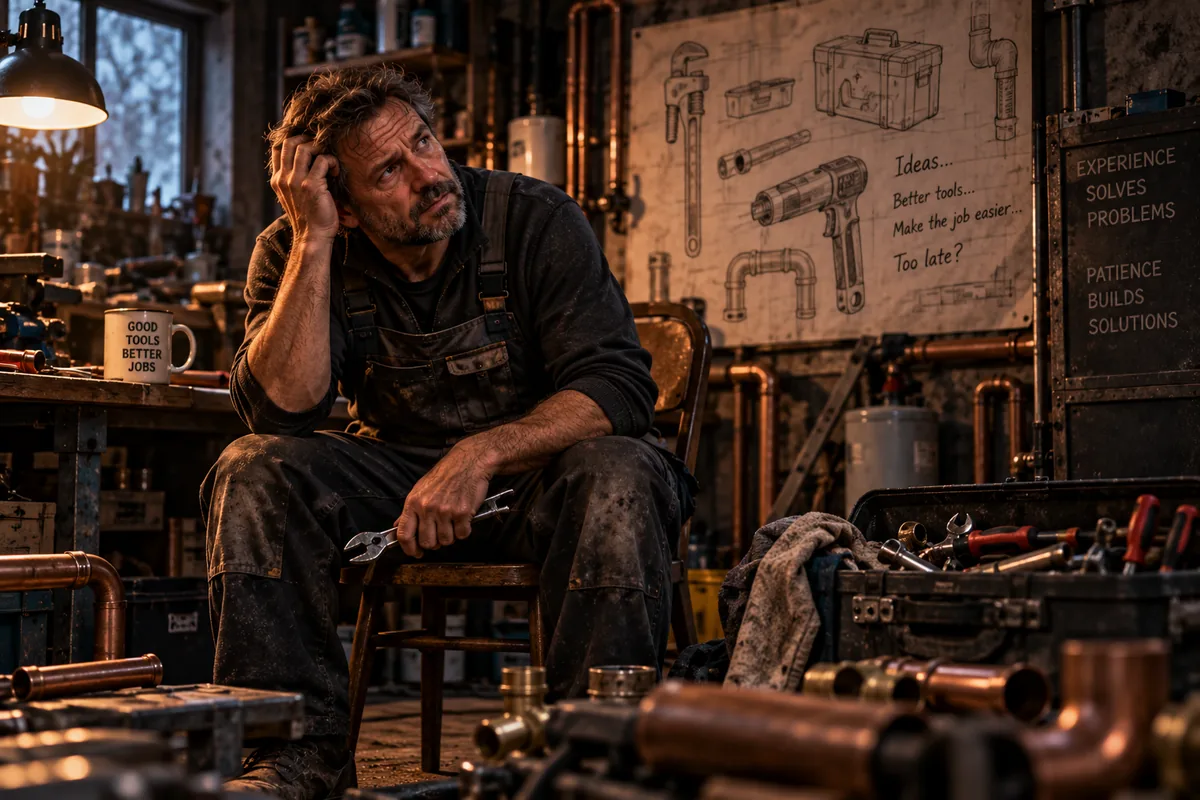
Maybe your experience isn't professional at all. Maybe life simply knocked you around enough times that you learned things the difficult way. That counts too.
The older we get, the more experiences we've usually collected. Not necessarily more certificates. Not necessarily more money. Experience.
Things that worked. Things that didn't. Things somebody taught us twenty years ago. Little solutions we discovered because the official solution didn't work. Things we would never find written in a manual.
That information has value. AI doesn't suddenly make it worthless. I think it can do almost the opposite.
AI can give our experience another place to go.
How many good ideas are walking around in people's heads?
I think about this quite a lot.
How many people are walking around this planet carrying an idea they've had for ten, twenty or thirty years?
Maybe they wanted to invent something. Write something. Design something. Build a little business. Solve a problem they'd encountered at work. Make something better because they've spent years dealing with something badly designed by somebody who never actually had to use it.
And then life happened. Someone told them there was no money in it. Parents told them to study something sensible. They needed an income. Children arrived. Mortgages arrived. Responsibilities arrived.
The idea slowly moved further back. Eventually we tell ourselves: that was something I wanted to do when I was younger.
Maybe that's where it ends. But maybe it doesn't have to.
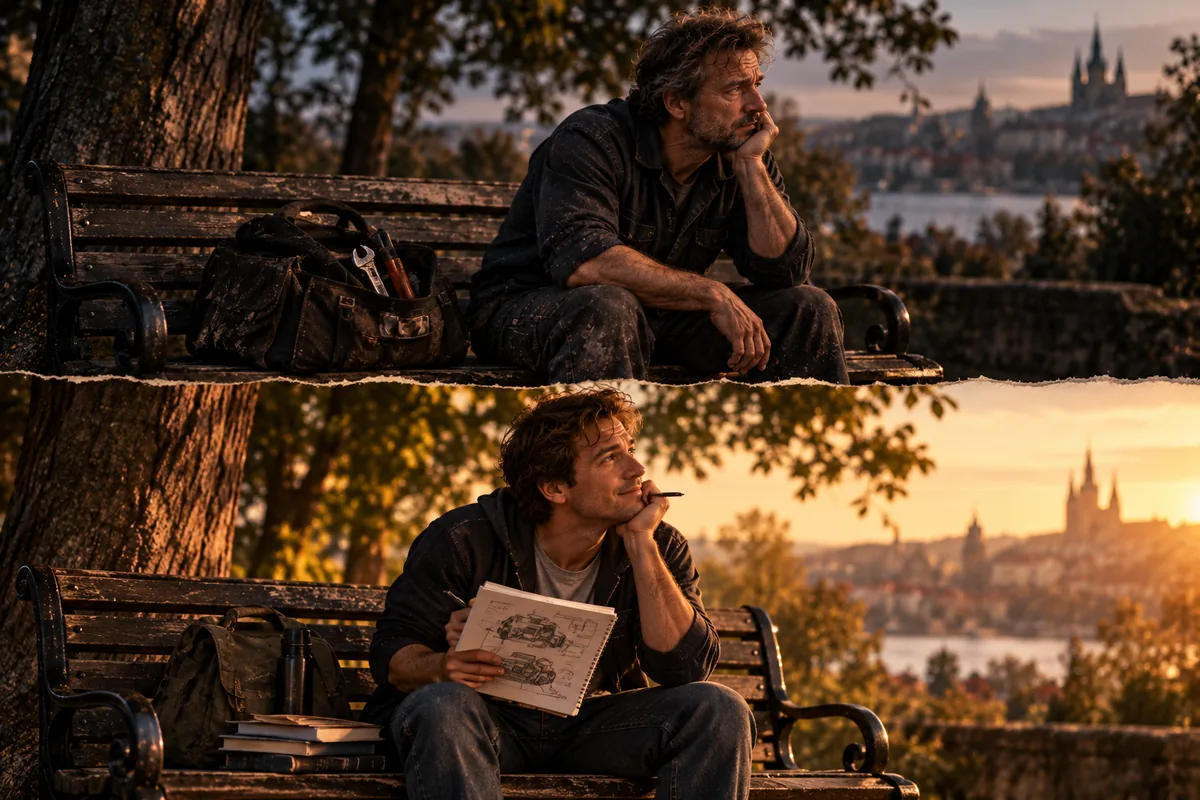
Because something has changed. The barrier between having an idea and experimenting with that idea has become smaller.
Not gone. Smaller. That's an important difference.
AI isn't going to magically turn every idea into a brilliant product. It isn't going to replace learning. It isn't going to replace experience. And typing one sentence into ChatGPT doesn't suddenly make somebody a software developer, designer, electrician, writer or engineer.
That's another thing I hear sometimes: "AI can do that now. I could do it myself."
Okay. Have you? Sit down. Open the computer. Try.
That's where the interesting part starts.
Don't judge it from outside
There are people who have already decided what AI is without really using it.
Some are frightened of it. Some hate it. Some think it's cheating. Some think they understand exactly what it can do because they've watched other people talking about it.
I don't want to convince any of them. That's not what ZeroWic is for. I'm only opening the door. Because I was on the other side of that door once too.
And if you're curious enough to look through it, my suggestion is incredibly complicated:
Just use it.
That's it.
You don't need a course first. You don't need to understand artificial intelligence. You don't need to learn fifty prompting techniques.
Start with something you already know. That's important.
Ask AI about something from your work. Challenge the answer. Tell it when it's wrong. Explain how you would do it. Ask another question. Have a conversation.
You'll start understanding what it's good at, where it struggles, and how you can work with it.
And because you're talking about something you understand, you're not entering that conversation as somebody with nothing to contribute. You're bringing the part AI doesn't have: your experience.
Maybe go back for that old idea
There's one question I'd like to leave here.
Do you remember what you wanted to do when you were younger? Before somebody told you what was sensible. Before earning money became more important than experimenting. Before responsibilities took over.
Maybe there's nothing there anymore. That's fine. But maybe there is. Maybe there's something you've quietly been carrying around for twenty years.
I'm not telling you to quit your job tomorrow. I'm definitely not telling you AI will make you rich. I'm saying something much smaller.
Have another look at it.
You have something now that your younger self didn't have. Years of experience. And alongside that experience, you suddenly have access to tools that can help you research, question, write, design, troubleshoot, organise, learn and experiment.
That's an interesting combination.
Maybe the idea still won't work. Fine. You'll know. Maybe it turns into something completely different. Fine. Or maybe something you've been carrying around inside your head finally gets a chance to exist outside it.
Who knows?
So maybe slow down
That's why when I read that some of the people leading AI development are talking about slowing the pace, my reaction isn't disappointment. Part of me is actually relieved.
Their reasons and mine aren't exactly the same. They're looking at frontier AI, safety and responsibility. I'm looking from much further down the road at people like me trying to use the thing. But perhaps both perspectives eventually meet somewhere.
Progress needs time to be understood.
And maybe we don't need another hundred things tomorrow. Maybe we need some time with the incredible things sitting in front of us today. Time to learn them. Time to question them. Time to contribute something of our own.
And particularly for those of us starting again a little later: don't look at your age and assume technology has moved on without you.
You haven't arrived empty-handed. Your knowledge matters. Your skills matter. Your experience matters. Bring them with you.
Then start. Slowly is fine.
Still building. Never done. Never will be.
Sources
Dario Amodei, We Must Pace the Frontier (Anthropic, 13 September 2026)
Forbes, Anthropic CEO Dario Amodei Calls For A Slowdown In Frontier AI
SiliconANGLE, Sam Altman and Elon Musk back the call to slow down frontier AI