
Not to do the work for me. To answer my questions.
I remember when learning something new meant going to the library. You found a book, read it, returned it, and sometimes waited for another one to become available. If you had a question the book didn't answer, you needed to find someone who knew. And finding that person wasn't always easy.

What you could learn depended a lot on where you lived, who you knew, what books were available and what knowledge existed around you. Looking back now, it almost feels like living in one small room. There was an enormous world outside, full of people who knew things you wanted to learn, people who had already solved the problems you were struggling with, but reaching them was incredibly difficult.
If nobody around you understood what you were interested in, your options were limited. You figured it out yourself, worked with whatever information you could find, or sometimes simply accepted that you didn't know.
Then the internet opened the door
The internet changed that completely. Suddenly that small room had a door to the outside world, and Google made searching for information easier than anything we had experienced before.
That was incredible, but let's be honest with each other. How many times did you search for something and end up with 20 tabs open? One website said one thing, another said something slightly different, there was a forum discussion from 2009, and somewhere there was a 47-minute YouTube video that might contain the answer you needed.
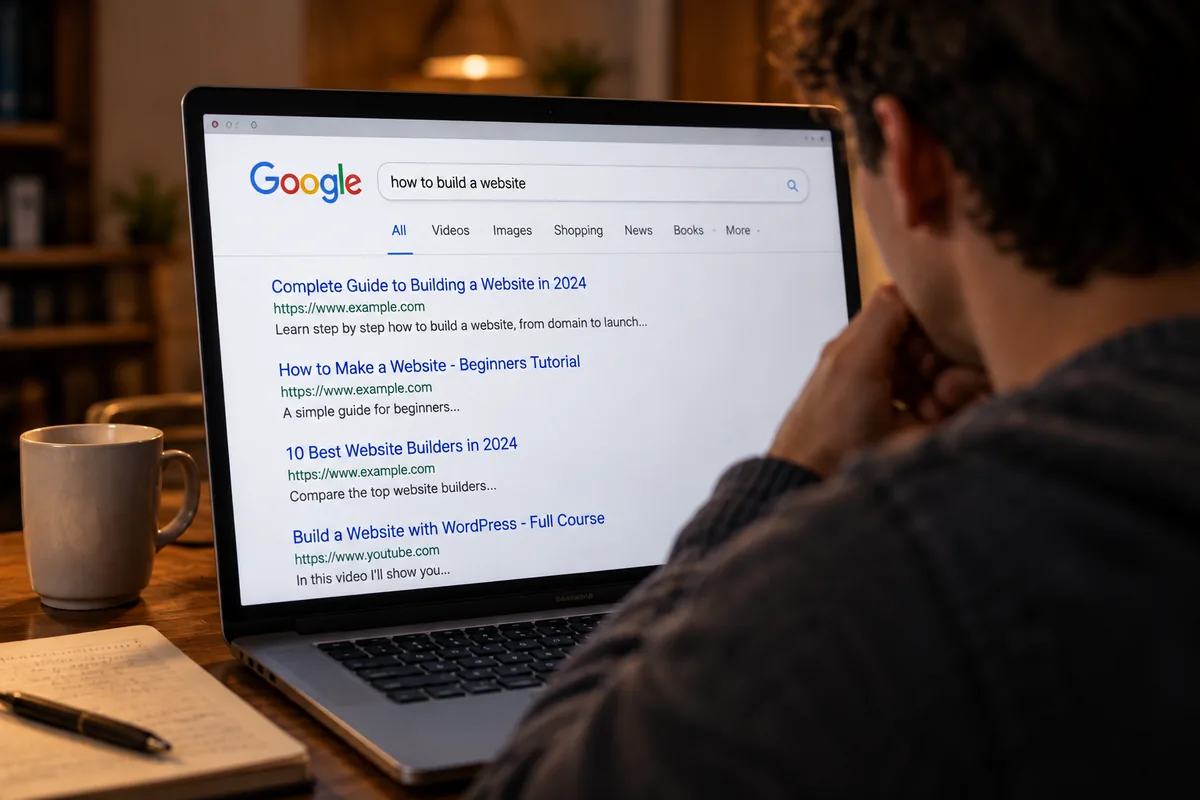
Sometimes the biggest problem was that you didn't even know what to search for. When you are completely new to a subject, you often don't know the terminology yet. You know what you want to achieve, but you don't necessarily know the correct words to describe it.
Google gave us access to an unbelievable amount of information. The difficult part was finding the right answer inside all of it.
Then AI changed the way I search
This is where AI feels different to me.
Today I can sit down after work and simply explain what I'm trying to do. I don't necessarily need to know the perfect technical term. I can describe the problem in my own words, explain what I already know, what I've tried, what happened and what I don't understand.
Then I can say, "Explain this to me."
If I still don't understand, I can ask for a simpler explanation. If something doesn't sound right, I can challenge the answer. Once I understand one part, I can go deeper into the next one. It becomes a conversation rather than a search.
And nobody gets tired of me asking.
That might sound like a small thing, but for me it really isn't.
Being a beginner isn't always comfortable
I've met plenty of incredibly knowledgeable people throughout my life, but someone being an expert doesn't automatically mean they have the time or patience to teach a beginner. I understand that. They may have spent 10 or 20 years learning something, and suddenly you arrive asking questions they stopped thinking about years ago.
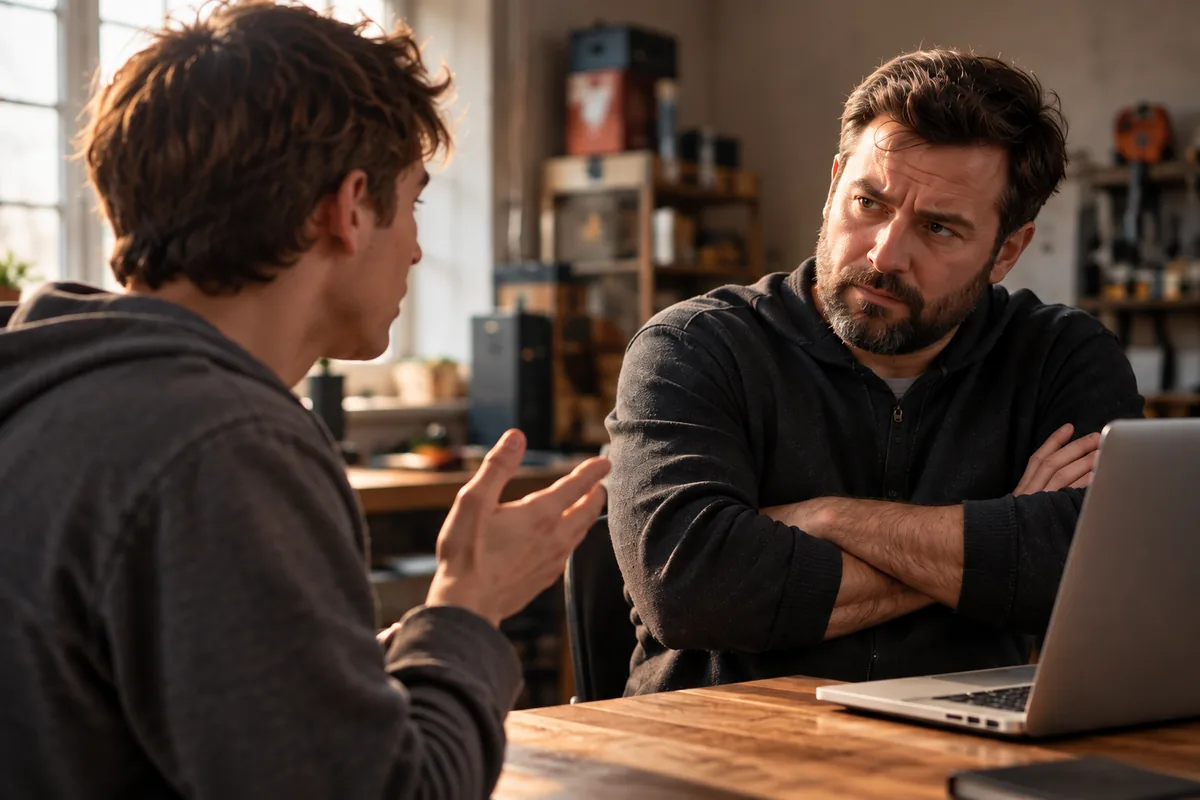
I've felt embarrassed many times asking something basic. I've even started questions with, "Sorry, this is probably a stupid question." Sometimes you get that look which immediately tells you that perhaps you shouldn't have asked. Other times the answer is simply, "Find out yourself. I had to learn it too."
Fair enough.
But there's a problem with that. When you're completely new to something, sometimes you don't even know where "find out yourself" begins.
That's something I really value about AI. I can start at zero without feeling embarrassed about being at zero. I can ask the basic question first and build my understanding from there.
It feels a little like meeting a new friend
There's another part of using AI that I find interesting. The longer I work with it, the better the conversations seem to become. I don't think that's simply because AI is getting better at understanding me. I'm also getting better at explaining myself.
It reminds me a little of meeting someone new. At first, you don't completely understand how each other thinks or communicates. You explain something, the other person understands it slightly differently, so you add more context. Over time, you learn how to communicate with each other better.
I've discovered the same thing here. If I simply say, "Build this," "Fix this," or "This doesn't work," I shouldn't expect a perfect answer. I need to explain what I'm trying to achieve, why I'm doing it, what I've already tried and where exactly I'm stuck.
For me, that's much more interesting than learning some magical "perfect prompt." I'm learning how to explain what I mean clearly, and that's a useful skill even when AI isn't involved.
It gives me the confidence to open new doors
AI doesn't magically make me an expert, and I don't want it to do everything for me. I want to understand why something works. I want to troubleshoot things, build things, make mistakes and learn from them.
What AI has changed is my willingness to enter subjects I might previously have looked at and thought, "That's not for me. I don't know enough about that."
Now I can open that door and ask the first question.
Then the second.
And eventually I'm not standing at the door anymore. I'm learning.
That's incredibly valuable to me because curiosity was never the problem. Access to the right knowledge, at the right moment and at the right level, often was.
From one small room to an open world
When I compare this with the world I grew up in, the difference is enormous. The knowledge itself isn't new. Much of it has always existed somewhere, inside books, universities, companies, workshops and, most importantly, inside people's heads.
Over time, people started sharing more of that knowledge online. Tutorials, articles, forums, videos, documentation, experiences, mistakes, solutions and discussions created an enormous collection of human knowledge.
And now AI gives us a completely different way of accessing it.
Of course, that doesn't mean everything AI tells us is correct. It can be wrong. People can be wrong. And anyone who has spent enough time online knows that the internet can definitely be wrong. We still need to think, question things and verify information when it matters.
But I can't ignore how extraordinary the access itself has become.
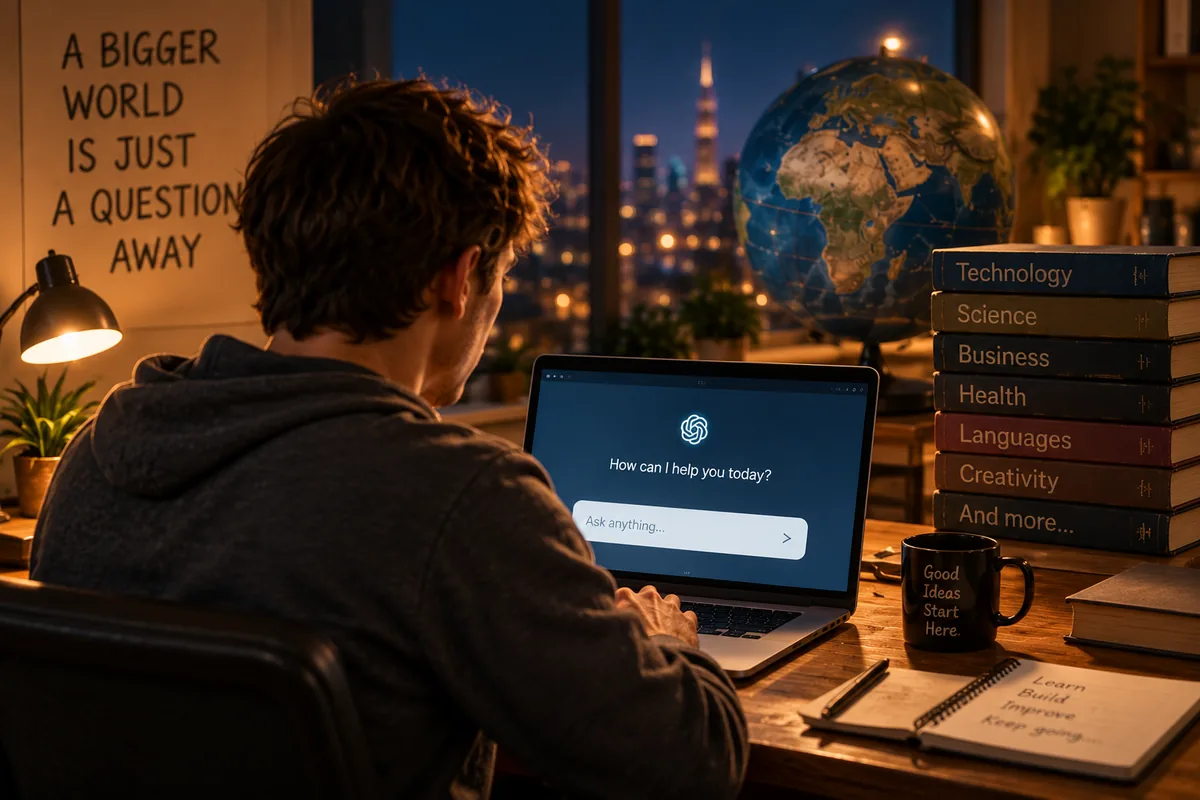
I can sit down at my computer after work with something I have never done before and say, "I know nothing about this. Where do I start?"
I know AI is a tool. But I'm also comfortable saying that, for the things I'm trying to build and accomplish in my life, it sometimes feels like having a very knowledgeable friend beside me. A friend I can question, challenge and learn with, and one that doesn't mind when I ask the same stupid question three different ways until I finally understand it.
That's why I wish I had AI when I was 20.
Not to do the work for me. To answer my questions.
And now that we have it, there's one question I really love being able to ask:
"What do I want to learn today?"
Isn't that amazing?